
Earth Works
Earth Works
Earth Works are rammed earth landform that acts as a clock. It keeps a nonrepresentational record of what happens at this particular place, at this particular time. It changes as the weather changes. It changes as the seasons change. It has a natural life, a beginning, or a birth, a living condition, and an end or a death.
THE OTHER SIDE OF THE EARTH : DeCordova Museum and Sculpture Park, Lincoln, MA, 1989-92
The Other Side of the Earth consists of two rammed Earth wall like slabs placed on either side of the promontory of The Decordova Museum and Sculpture Park. The wall like slabs have been an intuitively aligned and integrated into the natural contours of the site in such a way as to suggest a single continuous form penetrating the hillside. the viewer will come upon one side and sometime later discovers the other side of the Earth. The viewer becomes connected with time and space, with the nature of things, and with the earth underneath their feet.
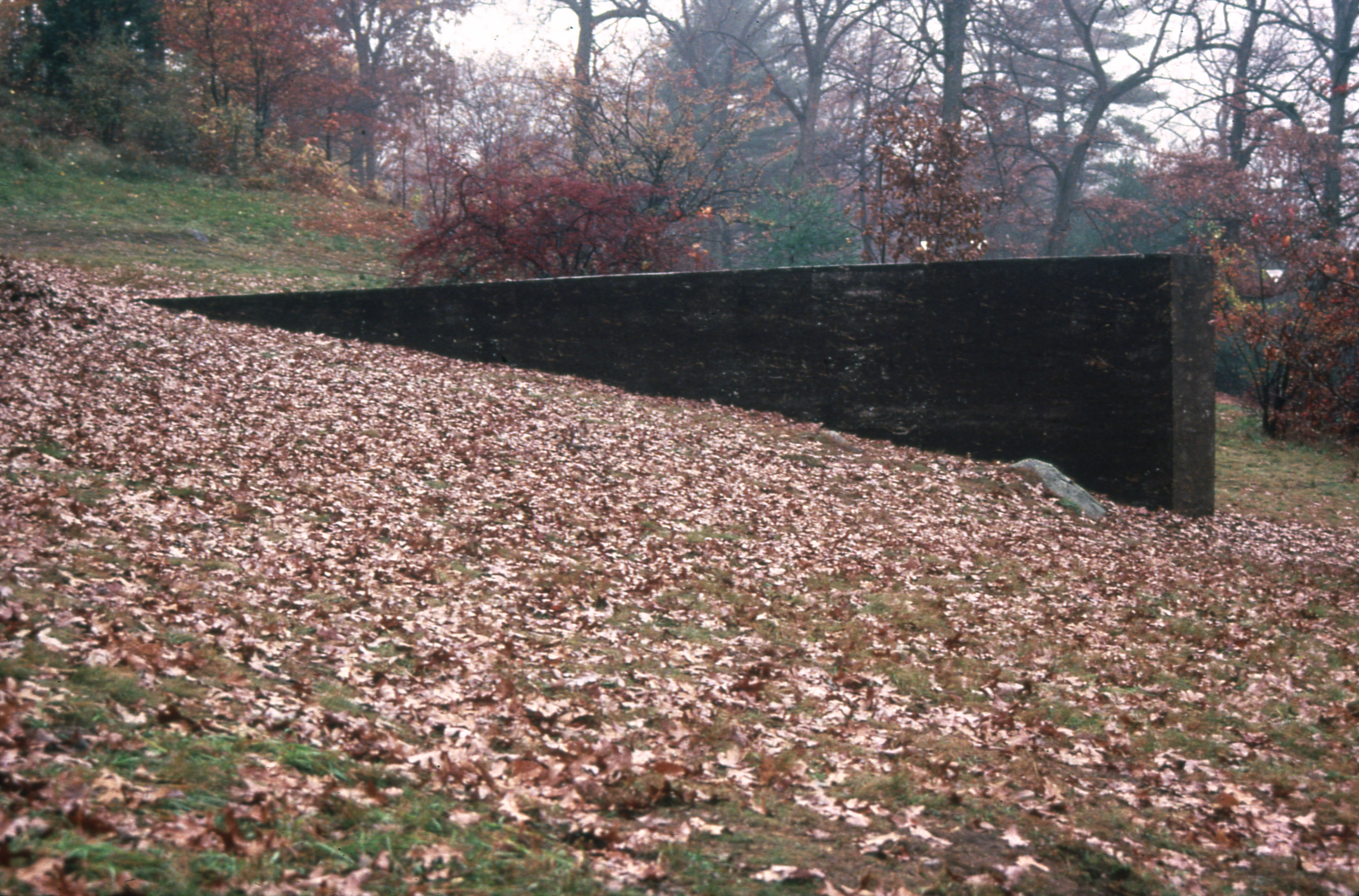
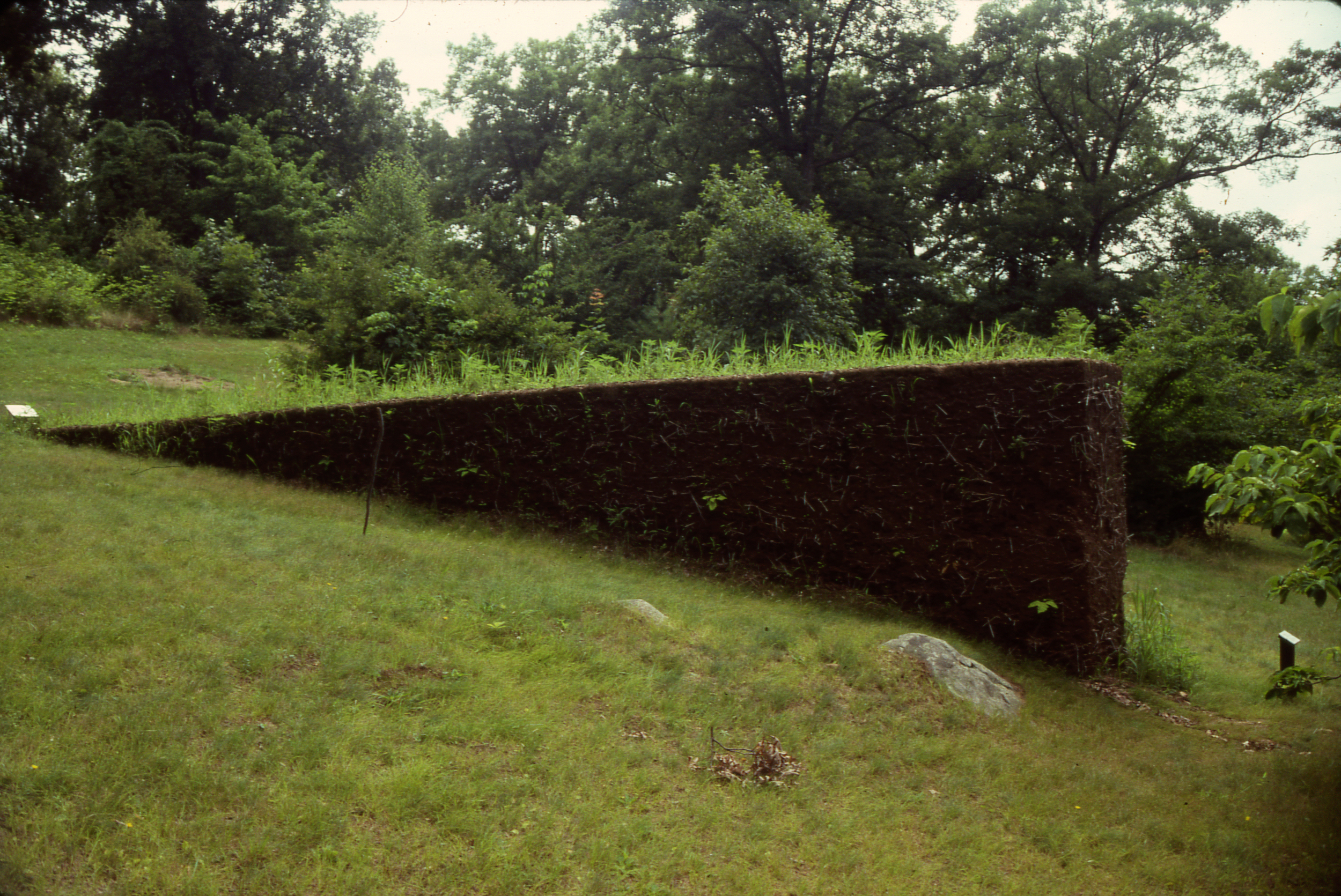
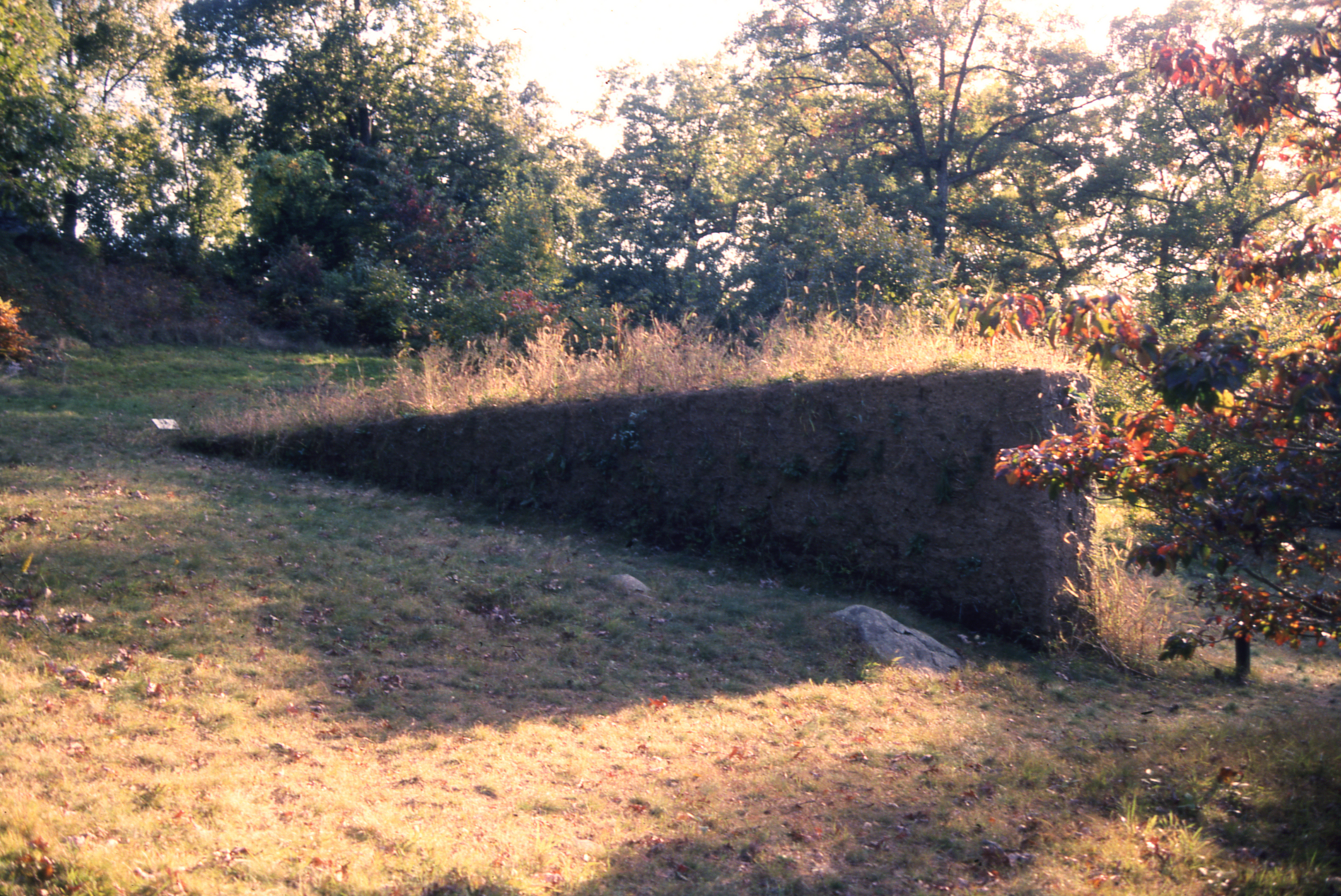
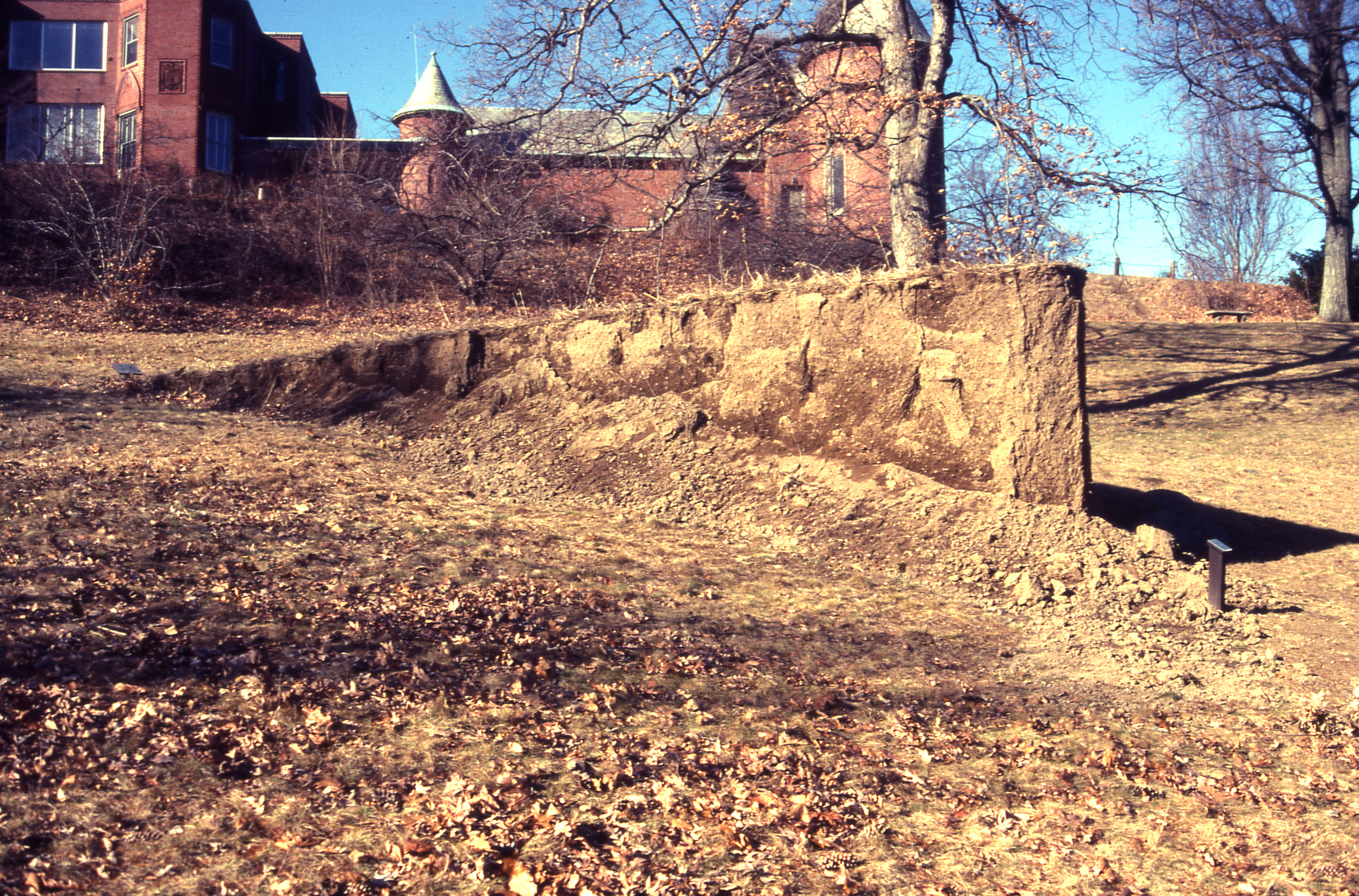
Above, right side, and below, The Other Side of the Earth


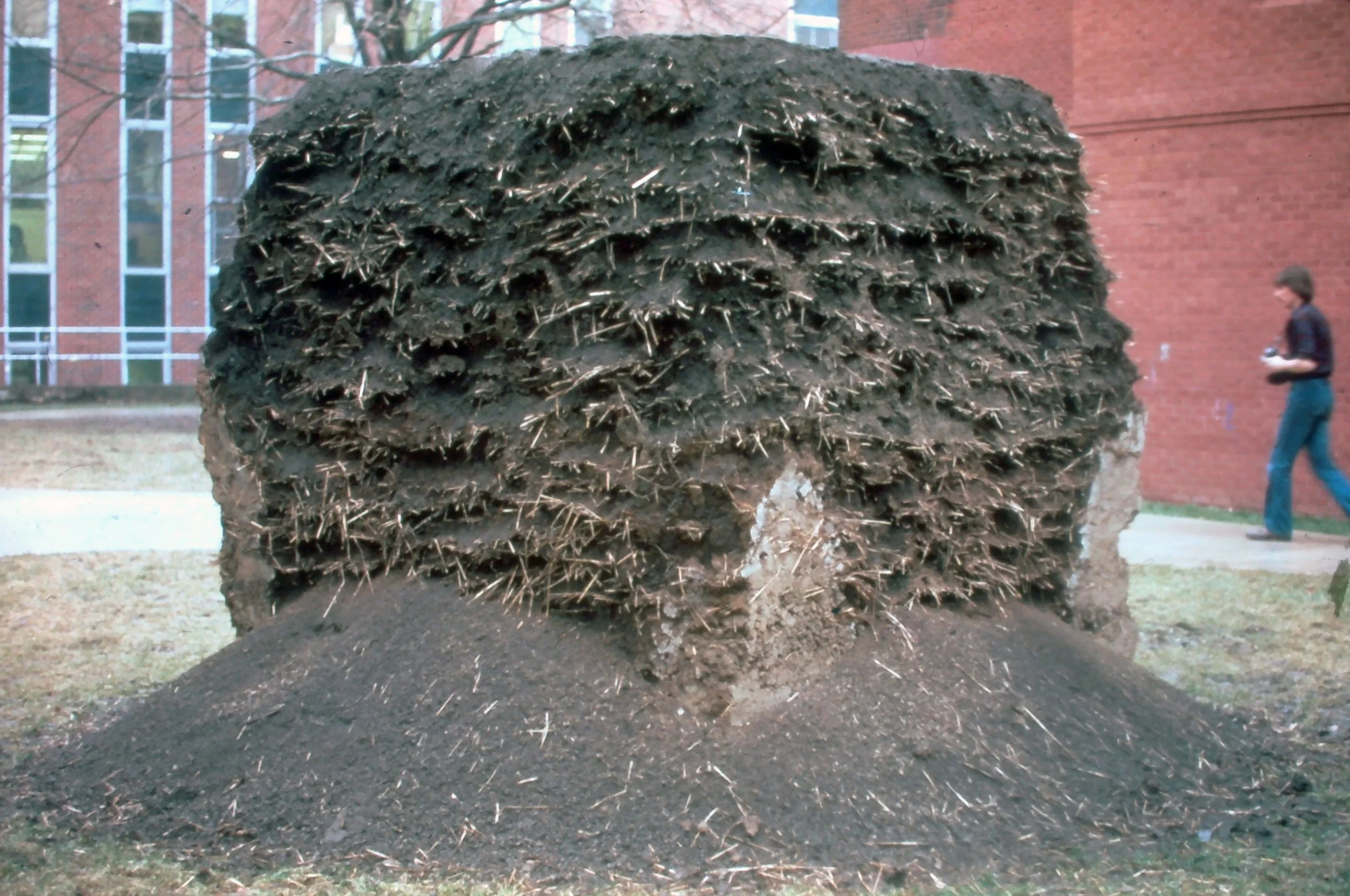
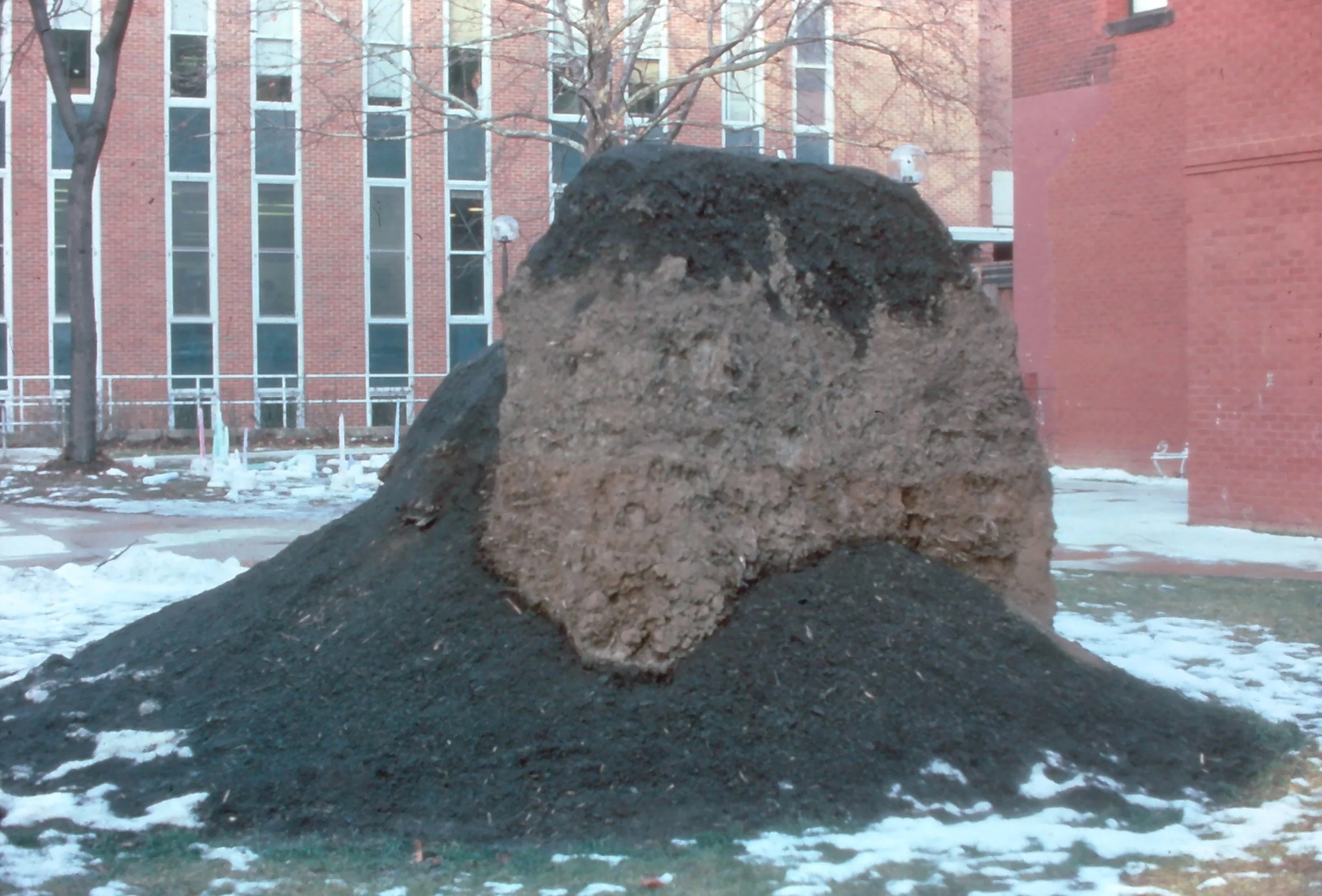
DIRT CLOCK : Ohio State University, Hopkins and Hayes Hall, Columbus, OH, 1978 – 1980
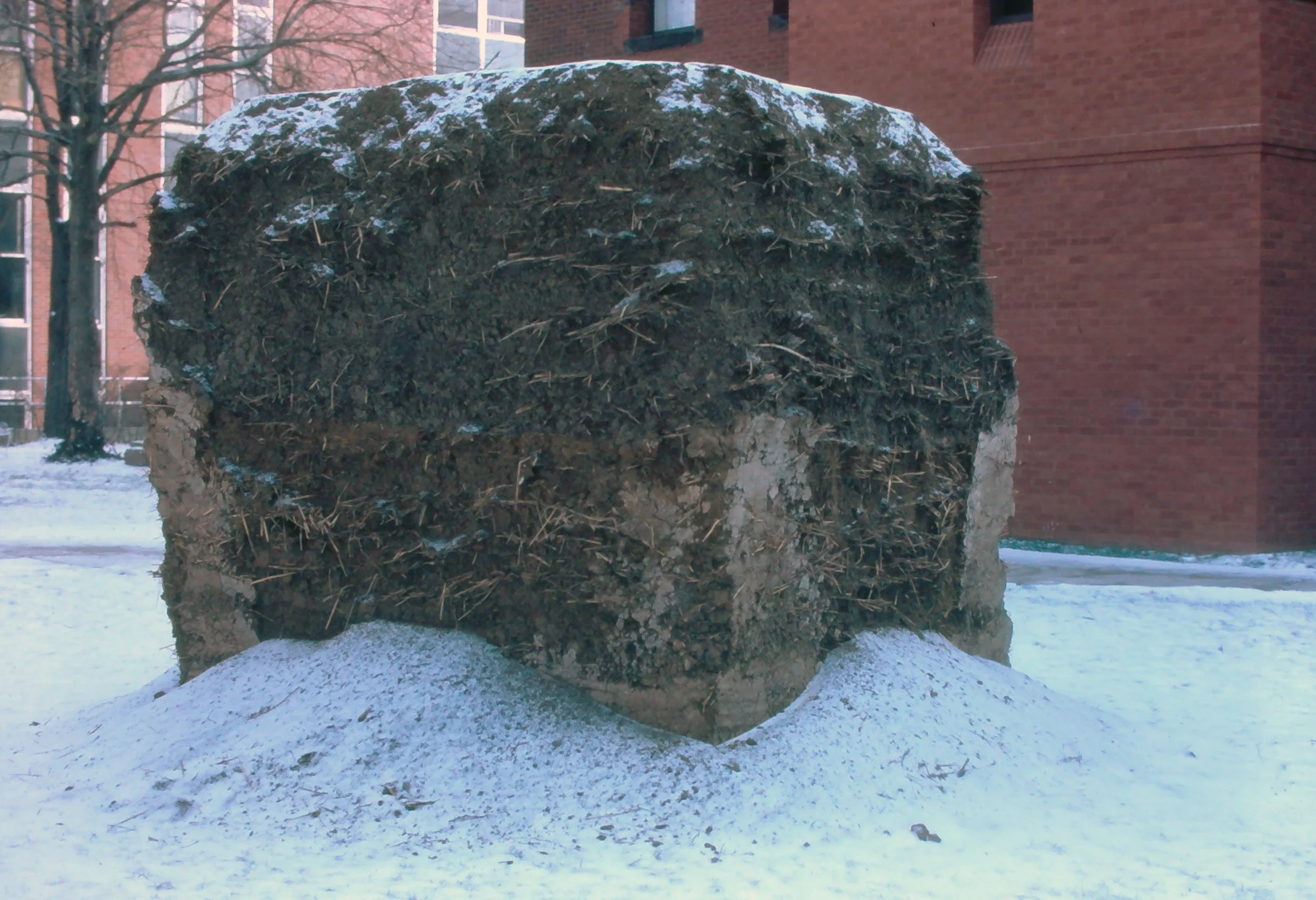
Dirt Clock consists of raw earth and straw formed into an 8’ x 8’ rammed earth cube, placed in an urban courtyard, a garden. It is an embodiment of the past. It takes on a life of its own. It has a beginning, a middle, and an end. Each day, it becomes a nonrepresentational record of its place and time, a world of natural phenomenon, response, intervention, dialogue occurring in and around and about the piece. Ultimately, it is transfigured and transformed. It ceases to be as it was once conceived. It takes on a new life, and a new form. Perhaps a flower bed, a field of grass, or simply transported and diffused on the soles of shoes.
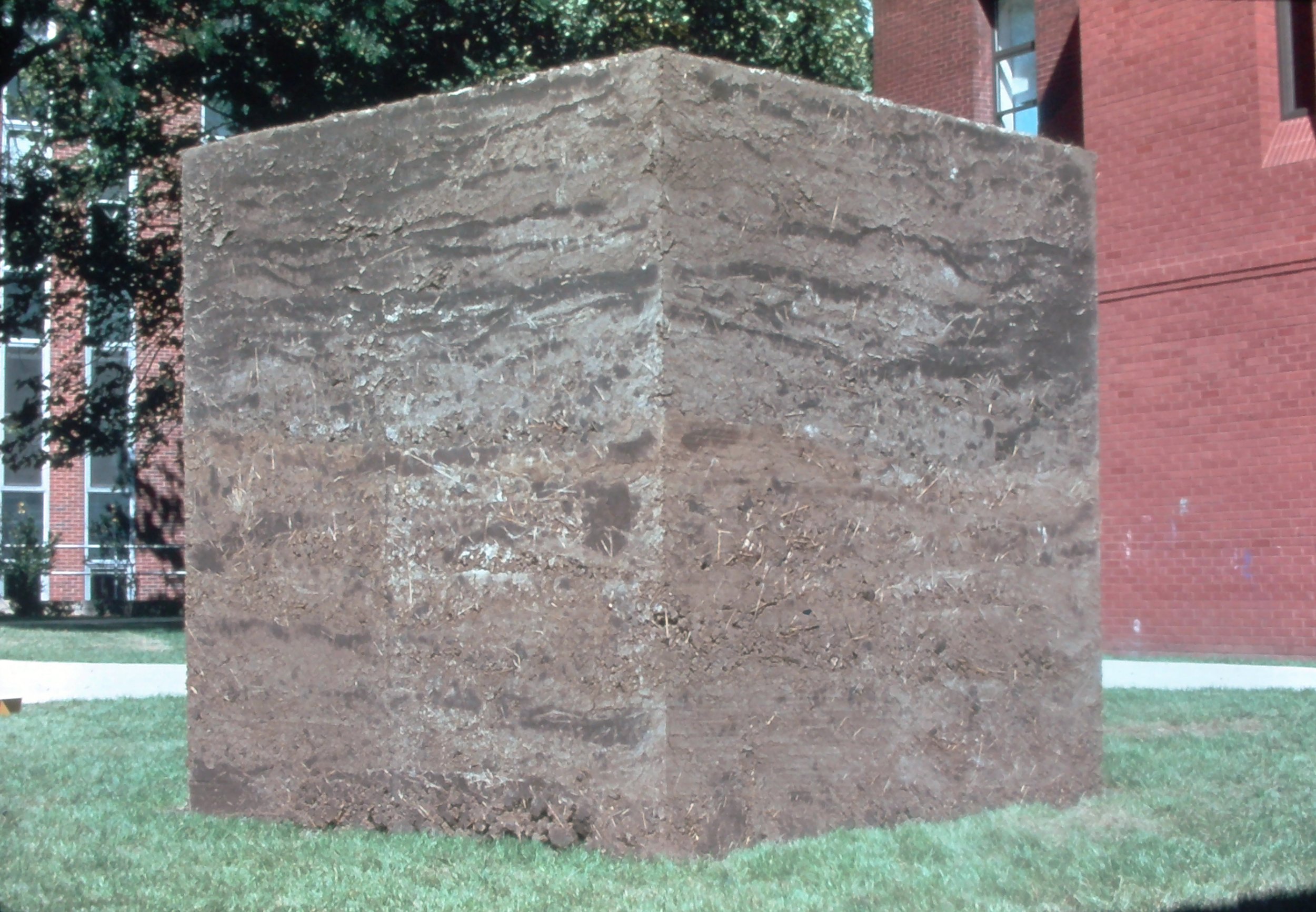
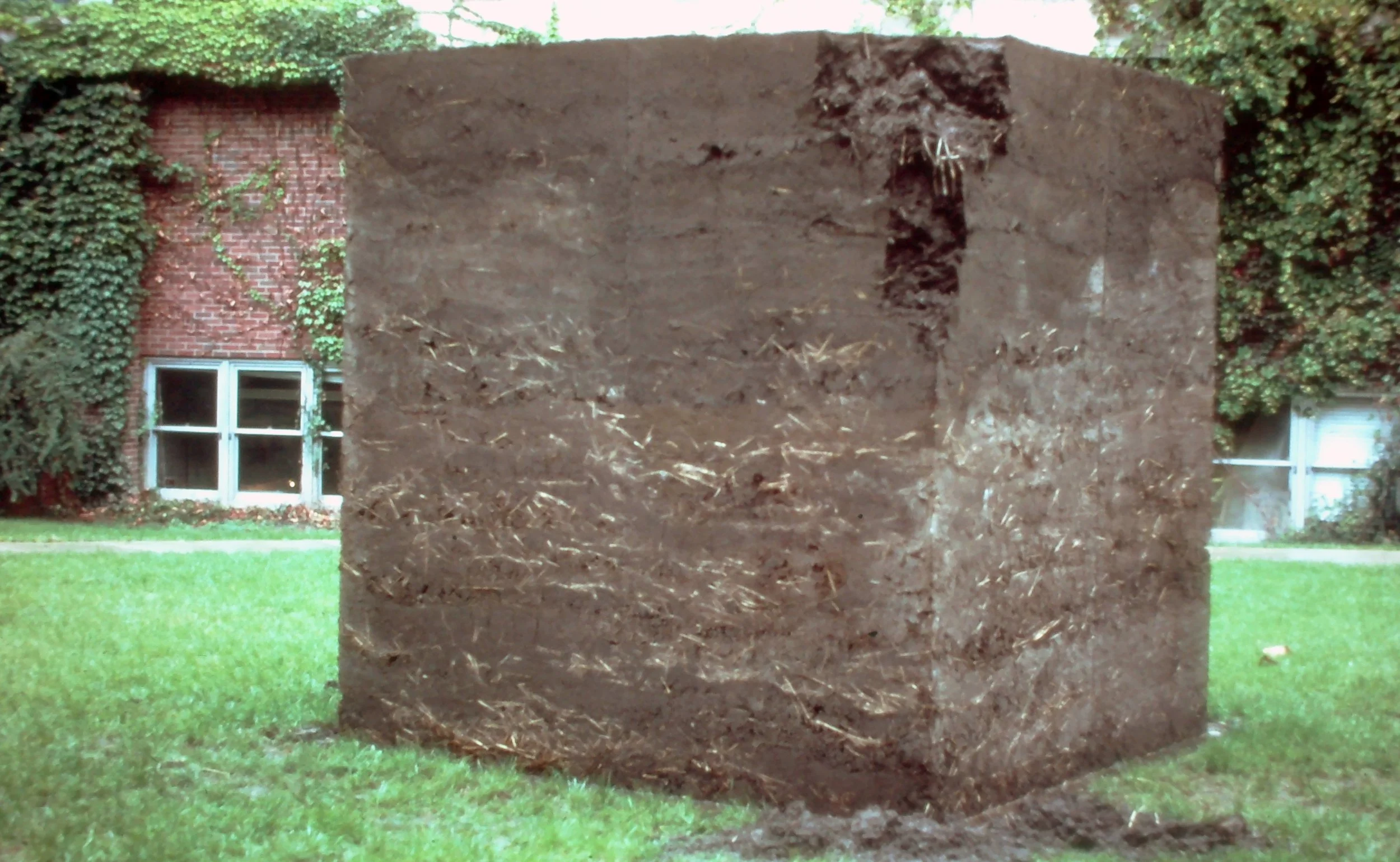
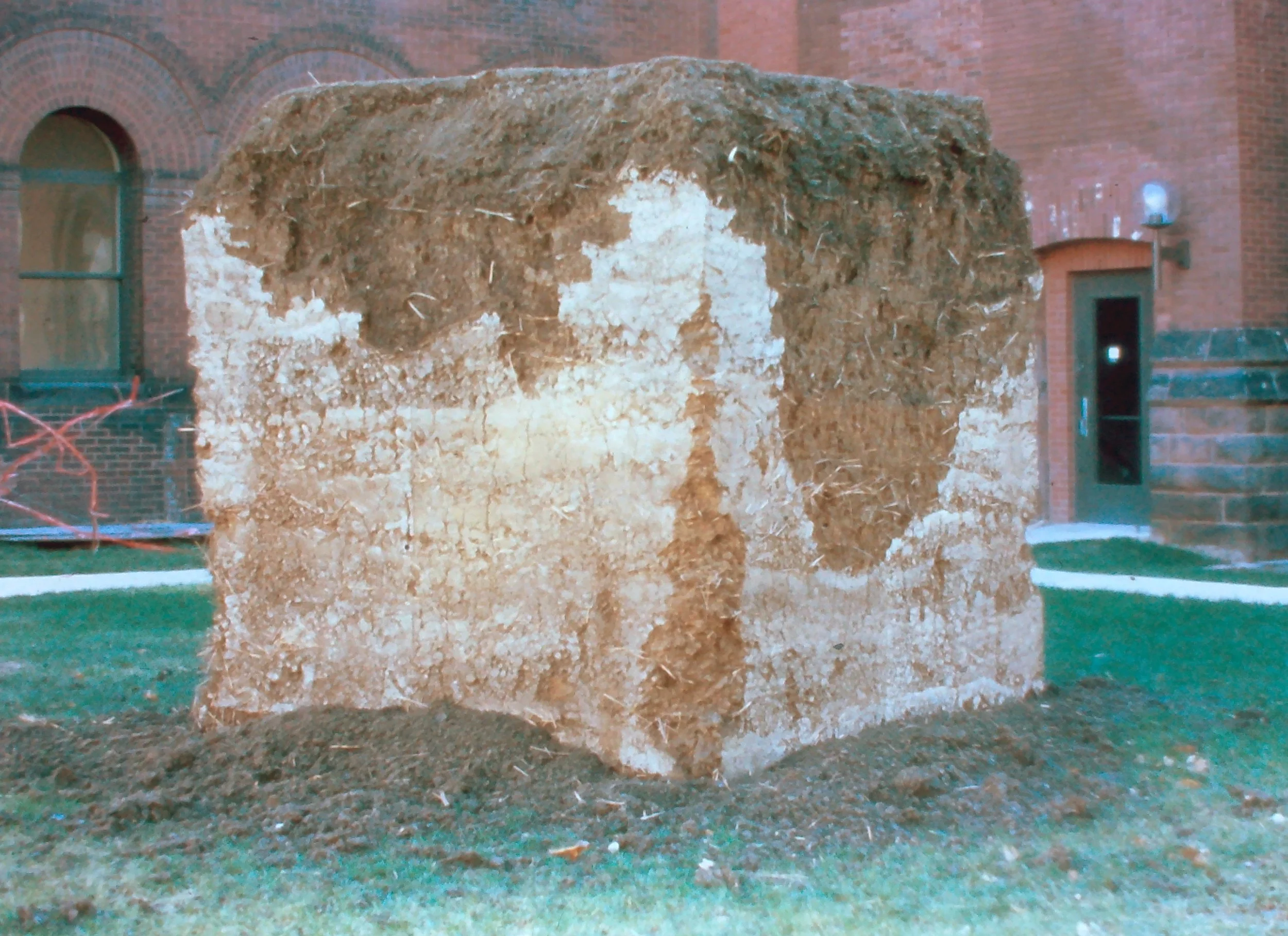

Above and below, Dirt Clock

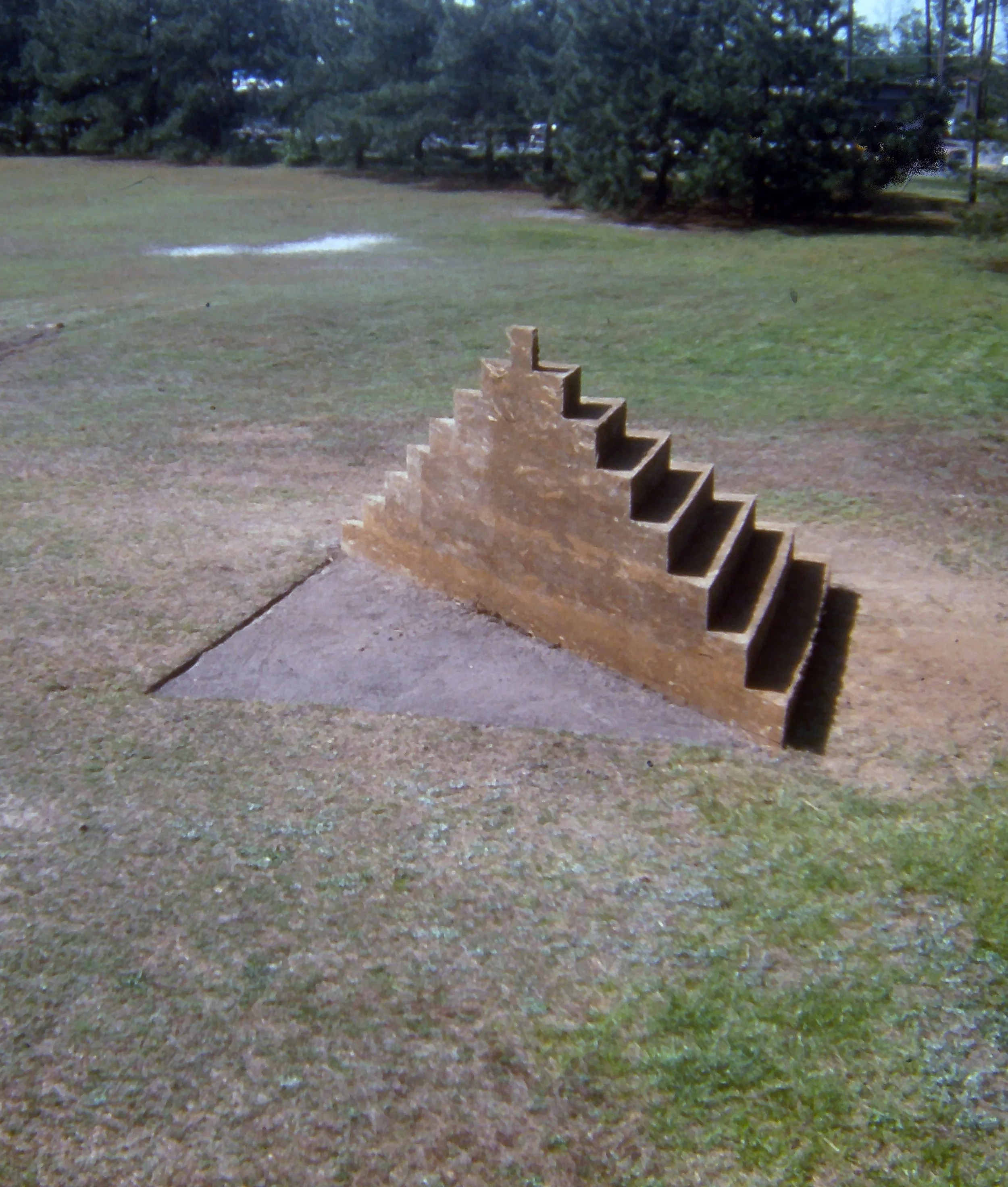
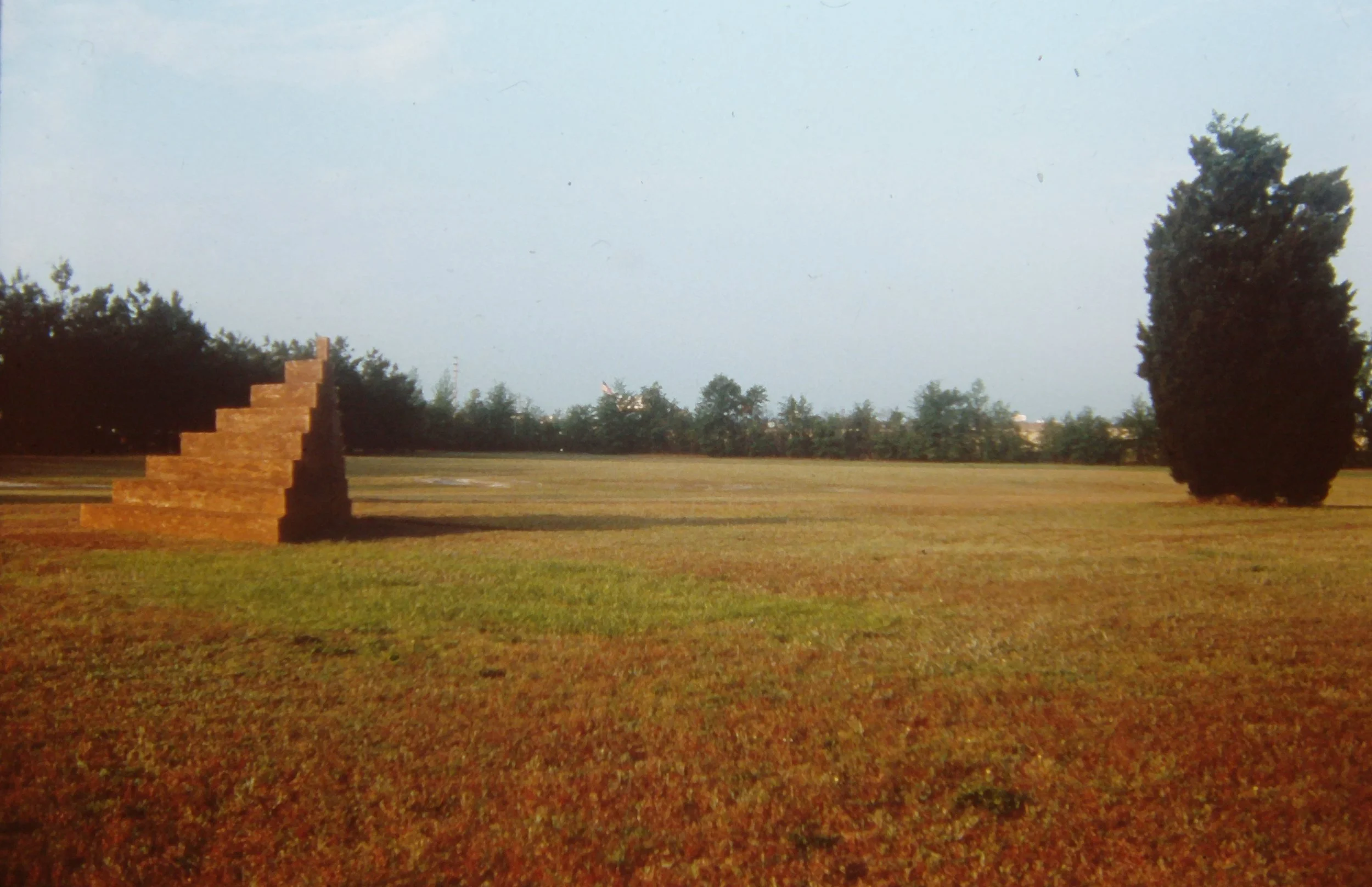
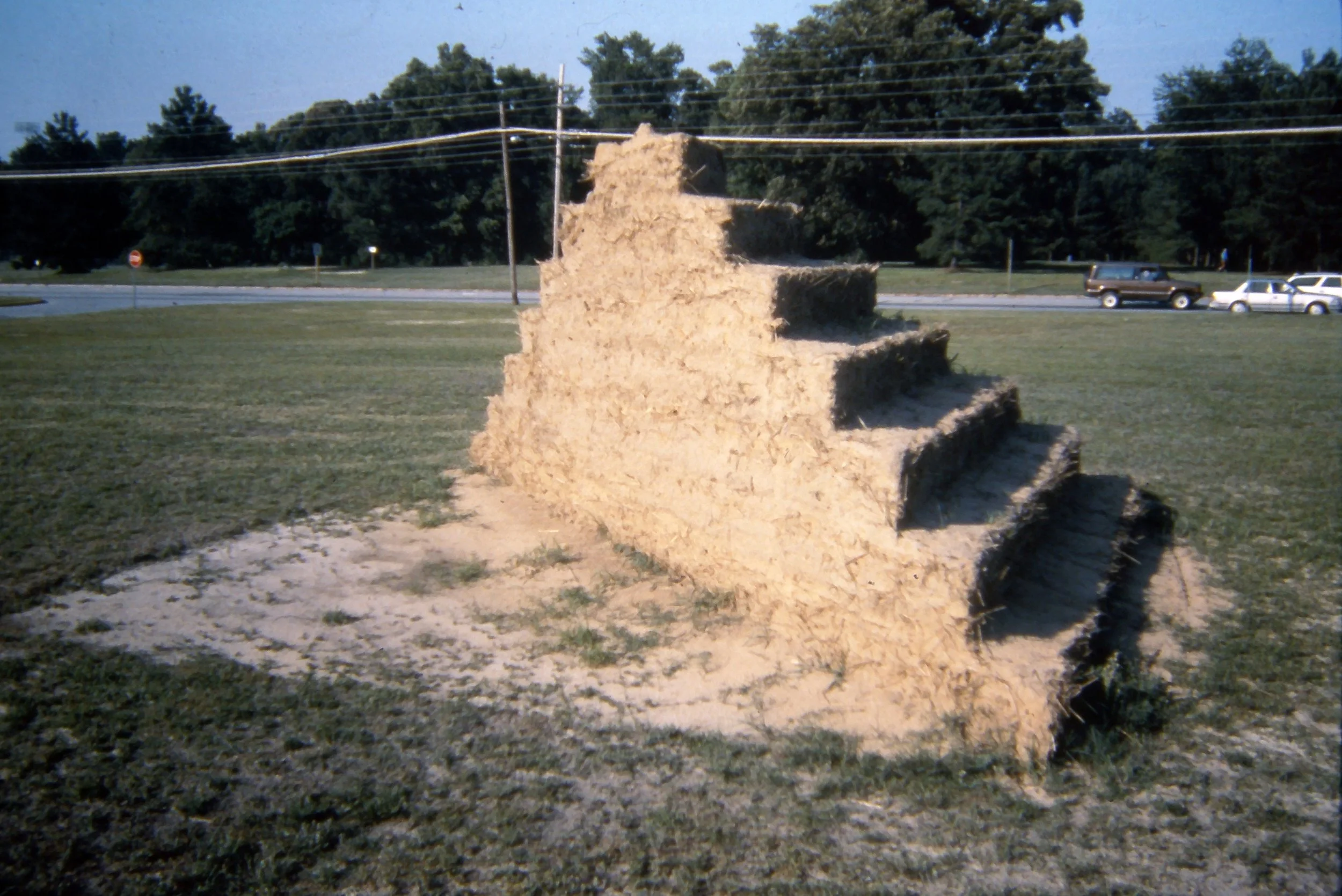
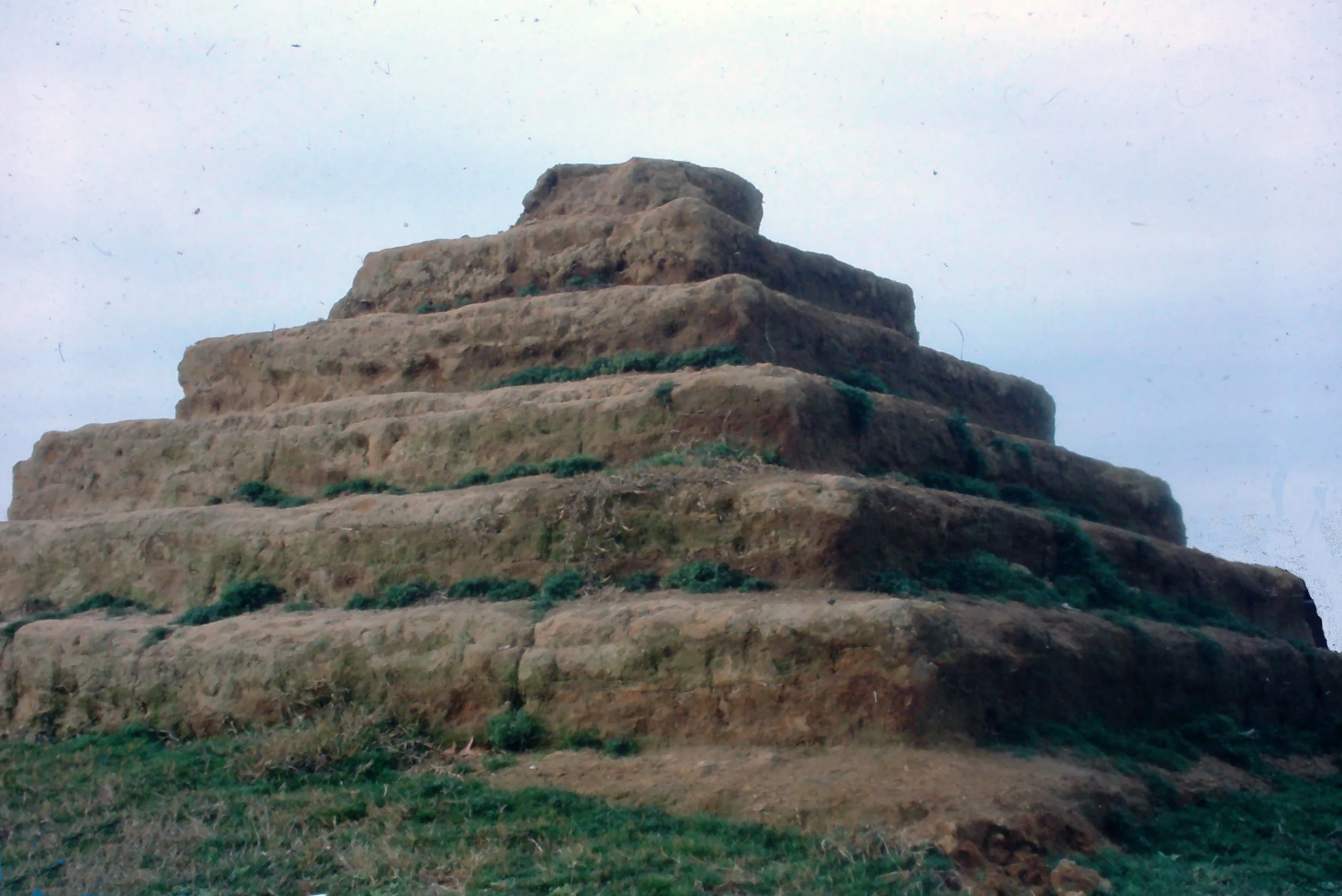
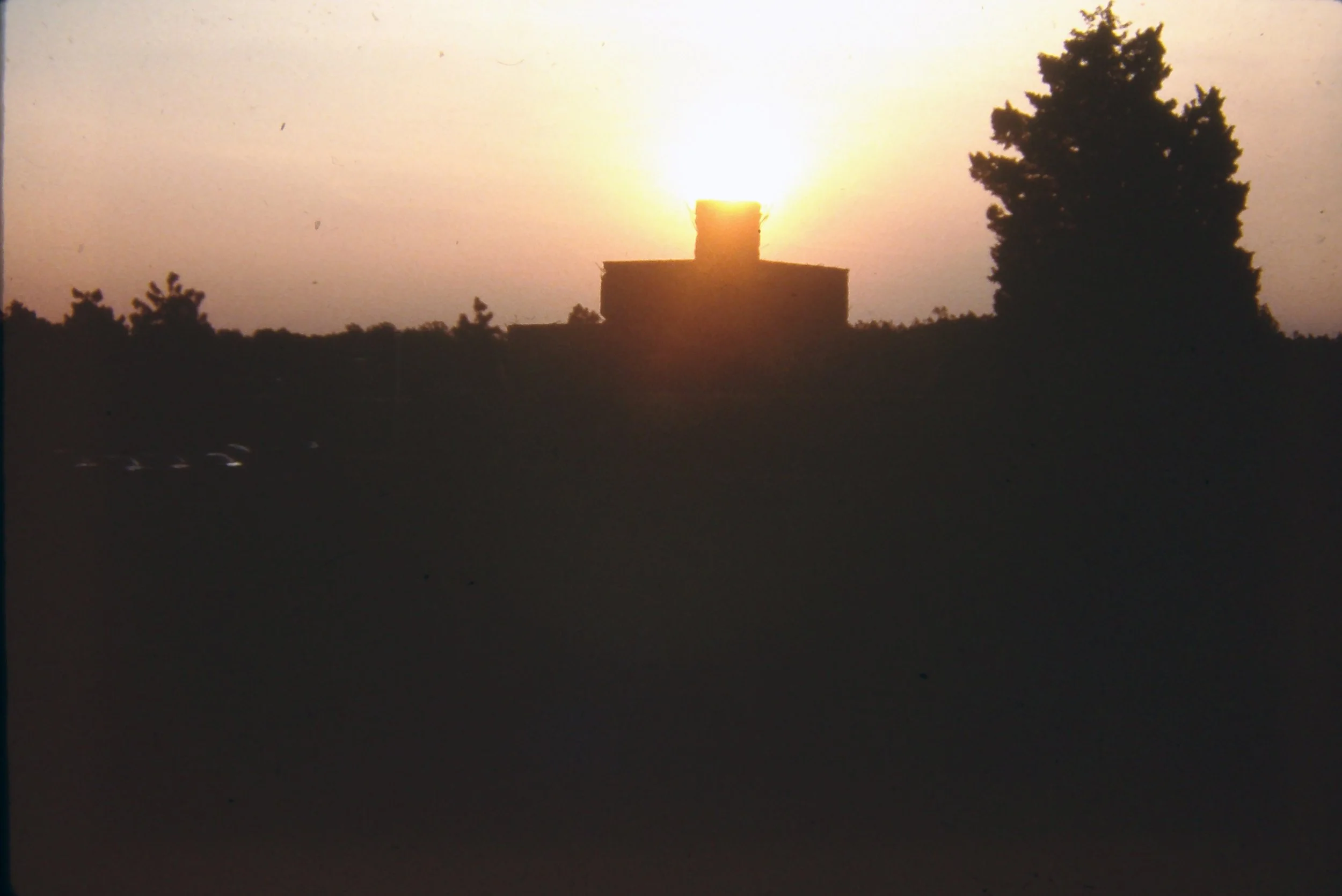
ECLIPSE : East Carolina University, Greenville, NC 1989
Eclipse, a rammed earth landform that has a reference to the past, has an implied architectural historic presence. It does not refer to specific place or time but rather evokes a sense of that which has come before. Eclipse illudes to ancient ruins exposed by erosion or by the archaeologist's hand, revealing only a fraction of a much larger built world long gone by.

OTHER EARTH WORKS and DRAWINGS
AXIS MUNDI A Ceremony (1989 - 1993) Haystack Mountain School of Arts and Crafts. Deere isle, Maine. Axis Mundi a Ceremony is a time-based environmental installation sited on a tidal island existing a single tide cycle and submerged under the sea.
DMZ University of Massachusetts at Dartmouth for the Centennial Celebration Sculpture Exhibition -1995. DMZ is a time-based environmental installation comprised of a rammed earth form, a void space in the earth and two life size cast bronze figures. Figure one is visibly, the other figure is inside the rammed earth form. As nature or acts of man affect the earth form the two bronze figures are revealed and stand face to face.
FIBONACCI, Architecture as Art, Mershon Museum, Ohio State University, Columbus, OH 1981. FIBONACCI an environmental rammed earth installation consisting of twelve 12 foot rammed earth columns on the grounds of the Mershon Museum.
BERLIN WALL Contemporary Arts Center, New Orleans, LA 1980. BERLIN is a time-based environmental installation comprised of a rammed earth form. Nature and acts of man affect the earth form and the wall will break down, or fall.
CENTER OF THE EARTH 1989. Acrylic painting
JERUSALEM 1989. Acrylic painting
BERLIN WALL 1989, acrylic painting
FIBONACCI 1989. Bronze model